
“Be not afraid.”
It is a simple phrase, but for many people living with chronic pain, it may be one of the most important messages they ever hear.
If you’ve been dealing with pain for weeks, months, or even years, you’ve probably developed a natural instinct: if it hurts, don’t do it.
That instinct makes sense.
Pain is your body’s alarm system. When you touch a hot stove or sprain your ankle, pain is designed to protect you. It tells you something may be wrong and encourages you to stop before further injury occurs.
But here’s the problem.
Not all pain means damage is occurring.
Understanding that difference is often the turning point in recovery.
The Fear-Avoidance Trap
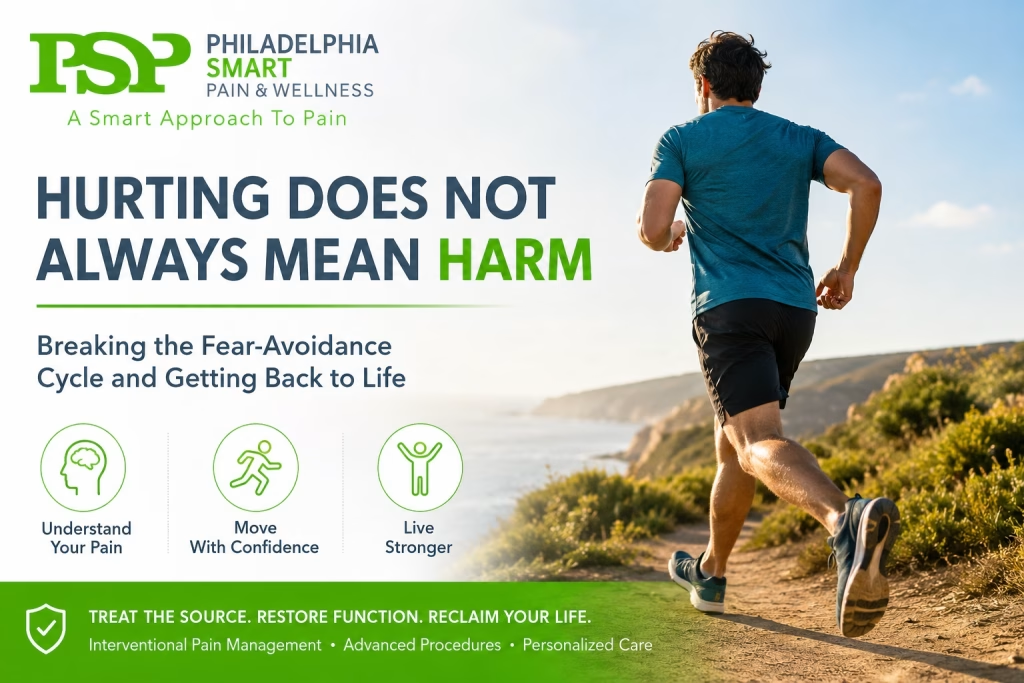
One of the greatest obstacles I see in rehabilitation is something called the fear-avoidance cycle.
It usually begins with an injury.
Movement becomes painful.
The brain naturally concludes:
“If moving hurts, moving must be causing more damage.”
So you move less.
At first, that feels like the right decision.
You rest. You avoid lifting. You stop exercising. You cancel walks. You skip the activities you once enjoyed because you’re trying to “protect” yourself.
Unfortunately, the body responds in ways most people don’t expect.
- Muscles become weaker.
- Joints become stiffer.
- Tendons lose their resilience.
- Balance declines.
- Endurance falls.
- Confidence disappears.
Now everyday activities require more effort than they did before.
Those same movements hurt even more.
So you move even less.
And the cycle repeats itself.
This vicious cycle is one of the most common reasons acute pain evolves into chronic pain.
Pain Changes More Than Your Body
Chronic pain doesn’t just affect muscles and joints.
It changes behavior.
It changes confidence.
It changes how your brain interprets movement.
Many patients begin to associate bending, twisting, reaching, walking, climbing stairs, or exercising with danger—even when those activities are no longer causing tissue damage.
Eventually the fear of movement becomes as disabling as the pain itself.
This phenomenon is well recognized in pain medicine and rehabilitation. The brain becomes increasingly protective, sounding the alarm sooner and louder than necessary.
The body becomes capable of movement long before the mind trusts it again.
Hurting Does Not Equal Harm
This is one of the most important concepts I teach my patients.
Hurting does not necessarily mean harming.
That statement surprises many people.
To be clear, there are situations where pain should absolutely be respected. A fracture, infection, progressive neurological deficit, or significant structural injury requires appropriate medical evaluation and treatment.
However, once serious pathology has been identified and appropriately managed, many patients continue to experience pain even though movement is no longer causing ongoing damage.
In those cases, pain often reflects a nervous system that has become overly sensitive rather than tissues that are continuing to deteriorate.
Learning this distinction can be incredibly empowering.
Movement Is Medicine
One of the most effective treatments for many painful conditions is not complete rest.
It is progressive, intentional movement.
That doesn’t mean pushing through severe pain or ignoring your body.
It means gradually rebuilding strength, flexibility, endurance, coordination, and confidence.
Every successful rehabilitation program depends on movement.
Movement restores muscle strength.
Movement improves circulation.
Movement nourishes joints.
Movement reduces stiffness.
Movement retrains the nervous system.
Movement teaches the brain that activity can once again be safe.
The goal is not to avoid discomfort completely.
The goal is to regain function despite manageable discomfort while your body continues to heal.
What Interventional Pain Management Really Does
Many people think pain management is simply about injections or medications.
That isn’t how we approach care at Philadelphia Smart Pain.
Our mission is to identify the underlying pain generator and reduce pain enough so patients can actively participate in rehabilitation.
Sometimes that means treating inflammation.
Sometimes it means calming an irritated nerve.
Sometimes it means treating arthritis, a disc injury, tendon pathology, or another pain source.
The purpose is not simply to lower a pain score.
The purpose is to restore confidence.
When pain is better controlled, patients are able to exercise more consistently.
They move with greater intensity.
They rebuild strength.
They regain function.
Over time, they become less dependent on medications and more capable of returning to the activities they love.
That is where lasting improvement happens.
Don’t Let Fear Make Your World Smaller
One of the saddest parts of chronic pain is watching someone’s life gradually shrink.
They stop hiking.
They stop gardening.
They stop traveling.
They stop playing with grandchildren.
They stop exercising.
Not because they can’t—but because they’re afraid.
The longer this continues, the harder it becomes to reverse.
Recovery often begins with one simple shift in thinking:
Pain is information—not always an indication of injury.
When you understand the difference between discomfort and danger, you can begin rebuilding your life one movement at a time.
Final Thoughts
If you’re living with persistent pain, remember this:
Hurting does not always mean harm.
The right diagnosis, an individualized treatment plan, and a progressive rehabilitation program can help you safely break free from the fear-avoidance cycle.
At Philadelphia Smart Pain, our goal isn’t simply to help you hurt less.
It’s to help you move more, live more, and get your life back.
Ready to take the first step? Schedule a consultation with Philadelphia Smart Pain to determine the source of your pain and develop a personalized treatment plan that combines advanced interventional therapies with movement-based rehabilitation—so you can return to doing the things that matter most.